Introduction
Crypto has a way of turning quiet headlines into market-moving conversations overnight. That is exactly why coinbase ripple continues to attract attention from investors, traders, and everyday crypto users who want to understand what XRP is, why it matters, and how Coinbase fits into the story.
For many people, Ripple and XRP became impossible to ignore after years of legal uncertainty, exchange suspensions, relistings, and renewed interest in cross-border blockchain payments. Coinbase originally listed XRP in 2019, suspended XRP trading in January 2021 after the SEC sued Ripple, and later relisted XRP in July 2023 after a key court ruling.
The topic matters because XRP is not just another token people watch on price charts. It sits at the intersection of crypto trading, payments technology, regulatory clarity, and exchange access. Coinbase says XRP is supported on Coinbase Retail, Prime, and Custody, though availability can vary by region and product.
If you are trying to understand whether XRP belongs on your watchlist, how Coinbase handles it, what Ripple actually does, and what risks still remain, this guide walks through the story in plain English.
What Does coinbase ripple Mean?
At its simplest, coinbase ripple refers to the relationship between Coinbase, one of the best-known crypto exchanges, and Ripple-related XRP activity on the platform. Coinbase is where many users buy, sell, hold, send, and receive digital assets, while Ripple is a blockchain technology company closely associated with XRP and the XRP Ledger.
It is important to separate three things that often get mixed together. Coinbase is the exchange. Ripple is the company. XRP is the digital asset used on the XRP Ledger. Ripple says XRP is the native token of the XRP Ledger and helps facilitate transactions, protect the ledger from spam, and bridge currencies on the ledger’s decentralized exchange.
Coinbase, Ripple, and XRP Are Not the Same Thing
One of the biggest misunderstandings in crypto is assuming Ripple and XRP are identical. They are connected historically and commercially, but they are not the same entity. XRP runs on the XRP Ledger, a decentralized public blockchain maintained by a global community of businesses and developers.
Ripple builds financial infrastructure and blockchain-based payment solutions for institutions. Coinbase provides access to XRP for eligible users in supported regions. XRP itself is the asset that can move across the XRP Ledger without needing Coinbase or Ripple to process every transaction.
Why Coinbase Access Matters
Exchange access matters because liquidity, availability, and user confidence often shape how easily people can enter or exit a market. When Coinbase suspended XRP trading in 2021, it reflected the uncertainty created by the SEC’s lawsuit against Ripple. When Coinbase relisted XRP in 2023, it signaled that the legal picture had changed enough for trading to resume on its platform.
For everyday users, this means coinbase ripple is not just a search term. It represents a practical question: can I access XRP safely, legally, and conveniently through a platform I already use?
The Ripple and XRP Background
Ripple’s story starts with a big idea: international money movement should be faster, cheaper, and more efficient. Traditional cross-border payments often involve multiple banks, intermediaries, settlement delays, and foreign exchange friction. Ripple built products aimed at helping financial institutions move value across borders more efficiently.
XRP was designed for speed and low-cost settlement on the XRP Ledger. Coinbase describes XRP as the native token of the XRP Ledger and as a cryptocurrency used by the Ripple payment network for cost-efficient cross-border payments.
What Is the XRP Ledger?
The XRP Ledger, often shortened to XRPL, is a public blockchain built for moving value quickly. XRPL.org describes it as a decentralized, public blockchain with low transaction costs, high performance, and sustainability.
Unlike proof-of-work networks such as Bitcoin, the XRP Ledger does not rely on miners competing to solve energy-intensive puzzles. Instead, it uses a consensus mechanism where validators agree on the order and validity of transactions. This structure is one reason XRP transactions are often associated with fast settlement and relatively low fees.
Why XRP Became Popular
XRP gained attention because it offered a different value proposition from many early cryptocurrencies. Bitcoin was widely seen as digital money or a store-of-value experiment. Ethereum became known for smart contracts and decentralized applications. XRP was often discussed in relation to payments, settlement, and institutional finance.
That payments-focused narrative helped XRP build a passionate community. It also brought intense scrutiny, especially because Ripple held and distributed significant XRP reserves and used XRP in parts of its business strategy.
The Legal Turning Point
The legal history around XRP is one of the main reasons coinbase ripple became such a widely searched topic. In December 2020, the SEC sued Ripple, alleging that the company conducted unregistered securities offerings through XRP sales. Coinbase responded by announcing that it would suspend XRP trading pairs in January 2021.
The case changed how many U.S. exchanges approached XRP. Some platforms paused support, while others took different positions. For users, the practical result was confusion: XRP still existed, the XRP Ledger still worked, but access through certain major exchanges became limited.
What the Court Ruling Changed
A major shift came in July 2023, when a U.S. federal court ruled that XRP sales on public exchanges did not constitute investment contracts, while certain institutional sales by Ripple did fall under securities law. After that ruling, Coinbase updated its support page to say it had relisted XRP.
The case did not make every legal question in crypto disappear. It did, however, create a clearer distinction between exchange-based XRP trading and some institutional sales arrangements. That distinction mattered to exchanges, market participants, and XRP holders.
Where the Case Stands Now
The SEC later stated that the cross-appeals were dismissed and that the final judgment against Ripple would remain in effect, including a $125,035,150 civil penalty and an injunction related to registration provisions of the Securities Act.
Reuters also reported that the SEC concluded its lawsuit against Ripple, with the $125 million fine and injunction remaining in place.
For readers, the practical takeaway is straightforward: the biggest legal cloud over XRP has lifted compared with 2021, but XRP still exists in a regulatory environment that can change. Anyone trading or holding crypto should stay alert to official exchange updates, local rules, and risk disclosures.
How XRP Works on Coinbase
For eligible users, Coinbase provides a familiar way to access XRP. Users can typically buy, sell, convert, send, receive, or store supported crypto assets depending on their account, region, and product access. Coinbase’s XRP support page says XRP is supported on Coinbase Retail, Prime, and Custody, but not supported in Japan, Singapore, or Coinbase Wallet according to that page’s stated restrictions.
That means the experience may not be identical for every user. Location, account verification, product type, and regulatory rules can affect whether XRP is visible, tradable, or transferable.
Buying XRP on Coinbase
The basic buying process is similar to other supported assets. A user creates or signs in to a Coinbase account, completes identity verification where required, adds a payment method, searches for XRP, reviews the order, and confirms the transaction.
Coinbase’s general buying guidance says users need a valid ID and may be asked for proof of address before transacting. Verification timing can vary depending on location and account details.
Sending and Receiving XRP
Sending XRP requires more care than simply copying a wallet address. Coinbase’s original XRP listing announcement noted that inbound transfers and many sends require an XRP destination tag.
A destination tag is a short identifier used by some exchanges and custodial services to credit the correct user account. If you send XRP to a platform that requires a destination tag and you leave it out, your funds may be delayed or difficult to recover.
Coinbase Wallet and XRP
A common point of confusion is the difference between Coinbase the exchange and Coinbase Wallet. Coinbase’s support page states that XRP is not supported on Coinbase Wallet.
That distinction matters. Holding XRP in a Coinbase exchange account is not the same as holding it in a self-custody wallet. Exchange custody may feel easier for beginners, but self-custody offers more direct control when using wallets that support XRP. Each option carries trade-offs.
coinbase ripple Trading Fees and Costs
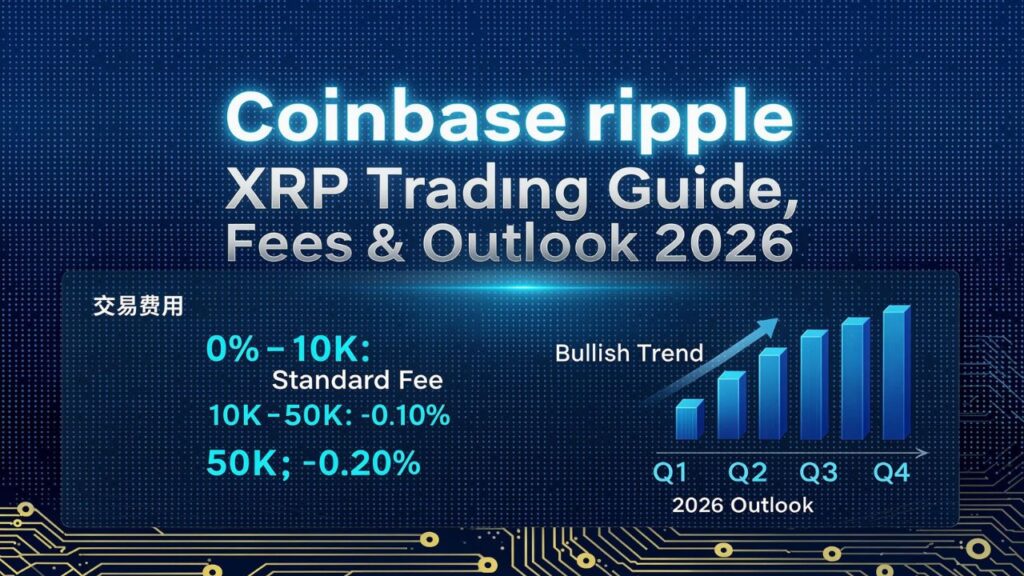
When people search for coinbase ripple, they often want to know what it costs to buy or sell XRP. The honest answer is that fees can vary depending on trade size, order type, region, payment method, and whether the user chooses a simple buy flow or advanced trading interface.
Coinbase typically shows applicable fees before a user confirms a transaction. That preview screen is important. It lets users compare the final cost before committing to the order.
Costs to Watch
Crypto trading costs are not limited to one headline fee. Users should pay attention to several possible expenses:
- Trading fees shown before order confirmation
- Spread between the quoted buy and sell price
- Network fees when sending crypto off-platform
- Bank, card, or payment processing costs
- Currency conversion costs for non-USD users
- Possible tax consequences after selling or converting
The most practical habit is to review every transaction screen carefully. A small fee difference may not matter much for a tiny purchase, but it can become meaningful for frequent traders or larger orders.
Liquidity and Slippage
Liquidity refers to how easily an asset can be bought or sold without causing a big price change. Slippage occurs when the final execution price differs from the expected price. Popular assets usually have deeper liquidity, but fast-moving markets can still create surprises.
XRP is widely followed and actively traded, but volatility remains part of the crypto experience. Even when the asset is available on Coinbase, market conditions can change quickly.
Why XRP Still Attracts Attention
XRP has survived multiple market cycles, regulatory pressure, exchange suspensions, and strong debate inside the crypto community. That alone makes it different from many tokens that disappear after one hype cycle.
The main appeal comes from its payments narrative. XRP transactions are designed to settle quickly and cheaply compared with many traditional systems. Ripple’s business messaging emphasizes financial infrastructure, cross-border payments, custody, and digital asset solutions for institutions. (Ripple)
Speed and Payment Utility
The XRP Ledger was built around fast value transfer. This makes it attractive to users who care about payment efficiency rather than only speculative price movement.
That does not guarantee future adoption or price growth. Utility and investment performance are related, but they are not the same. A network can be technically useful while its token price still rises or falls based on liquidity, sentiment, regulation, and macroeconomic conditions.
Institutional Interest
Ripple’s pitch to institutions focuses on modernizing financial infrastructure. Its website describes solutions for payments, custody, stablecoin-powered cross-border payments, and digital asset operations. (Ripple)
Institutional interest matters because it can support long-term relevance. Still, retail investors should avoid assuming that every partnership or product update automatically creates direct demand for XRP. The relationship between enterprise blockchain use and token value can be complicated.
Risks Every XRP User Should Understand
No crypto guide is complete without talking about risk. XRP may be more established than many digital assets, but it is still volatile, still sensitive to regulation, and still part of a market where prices can move sharply in either direction.
The coinbase ripple conversation often focuses on access and opportunity, but responsible users also think about what can go wrong.
Regulatory Risk
The Ripple case has moved forward significantly, but crypto regulation remains unsettled in many jurisdictions. Exchanges may change asset support, regional access, or product rules based on new laws, licensing requirements, or internal risk decisions.
Users should check Coinbase’s current support pages and local rules before making decisions. What is available in one country, state, or product may not be available somewhere else.
Market Volatility
XRP can rise quickly, but it can also fall quickly. Crypto prices respond to news, liquidity, exchange flows, lawsuits, macroeconomic conditions, Bitcoin trends, and broader investor sentiment.
This is why it is usually safer to treat XRP as a high-risk asset rather than a guaranteed opportunity. Position sizing, patience, and risk management matter more than social media excitement.
Custody Risk
Holding XRP on Coinbase is convenient, but it means trusting an exchange account, login credentials, and platform controls. Holding XRP in a private wallet gives more control, but the user becomes responsible for keys, destination tags, wallet compatibility, and transaction accuracy.
Neither approach is perfect. The better choice depends on experience, risk tolerance, and how actively someone plans to use the asset.
How to Think About XRP Before Buying
Before buying XRP through Coinbase, it helps to slow down and ask better questions. A thoughtful decision starts with understanding what role XRP would play in your portfolio.
Are you buying because you understand the asset, or because it is trending? Are you planning to hold for years, trade short-term moves, or use XRP for transfers? Are you comfortable with large price swings?
A Practical Checklist
Before placing an order, consider this simple checklist:
- Confirm XRP is supported in your region and account type
- Read the current Coinbase asset and support pages
- Review fees and spread before confirming
- Understand destination tags before sending XRP
- Decide whether you want exchange custody or self-custody
- Avoid using funds you cannot afford to lose
- Keep records for tax and reporting purposes
- Recheck regulatory updates if you live in a restricted region
This checklist will not remove risk, but it can prevent avoidable mistakes.
Long-Term Holder vs. Active Trader
Long-term holders usually care about adoption, regulation, network relevance, and multi-year market cycles. Active traders often care more about liquidity, chart structure, news flow, and entry timing.
The coinbase ripple setup can appeal to both groups because Coinbase offers simple access for casual users and more advanced tools for traders. But the mindset should be different. A holder needs conviction and patience. A trader needs discipline and a clear exit plan.
Common Mistakes to Avoid
Many XRP mistakes are not technical; they are emotional. People buy after a sharp rally, panic after a correction, or send funds without checking the correct address and destination tag.
Because crypto transactions can be difficult or impossible to reverse, small errors may become expensive.
Mistake 1: Confusing Ripple With XRP
Ripple is a company. XRP is a digital asset. The XRP Ledger is the blockchain. Coinbase is an exchange. Keeping those roles separate makes the whole topic easier to understand.
Mistake 2: Ignoring Regional Restrictions
A user may read that Coinbase supports XRP and assume it applies everywhere. Coinbase’s own support page lists restrictions for certain regions and products, so users should verify availability directly in their account.
Mistake 3: Sending XRP Without a Destination Tag
Destination tags are easy to overlook, especially for beginners. If the receiving platform asks for one, use it exactly as provided. A missing or wrong tag may cause delays or recovery problems.
Mistake 4: Treating Legal Progress as a Price Guarantee
Legal clarity can improve confidence, but it does not guarantee price appreciation. Markets price in expectations, liquidity, risk, and future uncertainty. XRP still moves like a crypto asset, not like a savings account.
coinbase ripple and the Bigger Crypto Market
The coinbase ripple story is bigger than one exchange and one token. It shows how regulation, exchange listings, court decisions, and investor confidence can shape the life cycle of a digital asset.
When Coinbase suspended XRP, the market saw how quickly legal uncertainty can affect access. When Coinbase relisted XRP, the market saw how quickly sentiment can shift after a favorable development.
What It Says About Exchange Listings
Exchange listings do not make an asset risk-free, but they can improve visibility and access. For many retail users, Coinbase support is a sign that an asset is easier to buy, sell, and manage.
Still, exchanges are not investment advisors. Their role is access, not a guarantee of future performance.
What It Says About Regulation
The Ripple case became a reference point in the wider debate over how crypto assets should be treated under securities laws. It also showed that different types of sales or transactions may receive different legal treatment.
That nuance matters. Crypto regulation is not always a simple yes-or-no question. Details around how an asset is sold, who buys it, and what promises are made can influence legal outcomes.
FAQ
Is XRP available on Coinbase?
Yes, Coinbase says XRP is supported on Coinbase Retail, Prime, and Custody, but availability is subject to regional and product restrictions. Coinbase’s support page says XRP is not supported in Japan, Singapore, or Coinbase Wallet.
What is the difference between Ripple and XRP?
Ripple is a company that builds blockchain-based financial infrastructure. XRP is the native token of the XRP Ledger. The XRP Ledger is the public blockchain where XRP transactions occur.
Why did Coinbase suspend XRP trading?
Coinbase announced in December 2020 that it would suspend XRP trading pairs because of the SEC’s lawsuit against Ripple Labs. Trading was fully suspended in January 2021.
Why did Coinbase relist XRP?
Coinbase updated its support page in July 2023 to say it had relisted XRP after a court ruling in the Ripple case. The ruling found that XRP sales on public exchanges did not constitute investment contracts, while certain institutional sales did.
Is coinbase ripple safe for beginners?
coinbase ripple access through Coinbase may be convenient for beginners, but XRP is still a volatile crypto asset. Beginners should understand fees, destination tags, custody choices, and market risk before buying.
Do I need a destination tag to send XRP?
Often, yes, especially when sending XRP to an exchange or custodial platform. Coinbase’s original XRP support announcement noted that inbound transfers and many sends require a destination tag.
Is XRP the same as a stock in Ripple?
No. XRP is not a share of Ripple, does not represent ownership in Ripple, and does not give holders shareholder rights. It is a digital asset used on the XRP Ledger.
Can XRP still face regulatory problems?
Yes. The Ripple case has progressed significantly, but crypto regulation can still change. Users should monitor official exchange updates, local laws, and credible regulatory news.
Conclusion
The coinbase ripple story is really a story about access, trust, regulation, and utility. Coinbase gives eligible users a familiar route to XRP, while Ripple continues to build around blockchain-based financial infrastructure. XRP sits between those worlds as a fast, widely watched digital asset with a long history and a passionate community.
For new users, the best approach is not hype or fear. It is clarity. Understand the difference between Coinbase, Ripple, XRP, and the XRP Ledger. Review regional availability. Pay attention to fees and destination tags. Treat XRP as a high-risk crypto asset, even if you believe in its long-term role in payments.
The market will keep changing, but informed users are always in a better position than rushed ones.