Introduction
That first moment in Hawaii feels almost unreal: warm air, ocean breeze, palm trees, and the sudden realization that you still need to pay for airport transport, snacks, tips, and your first meal. That is where hawaii currency to usd becomes surprisingly important for travelers who want a smooth start instead of a stressful one.
The good news is simple: Hawaii uses the United States Dollar, because Hawaii is a U.S. state. The official Hawaii tourism site also notes that Hawaiʻi uses the United States Dollar and that ATMs are commonly used for getting cash.
Still, many visitors search for hawaii currency to usd because Hawaii feels culturally and geographically different from the mainland United States. It is far out in the Pacific, has its own local customs, and welcomes travelers from Japan, Canada, Australia, New Zealand, Europe, and many other places.
So this guide walks you through exactly what money to bring, how cards work, when cash helps, how tipping works, where to exchange currency, and how to avoid small money mistakes that can make a dream trip more expensive than expected.
What hawaii currency to usd Really Means
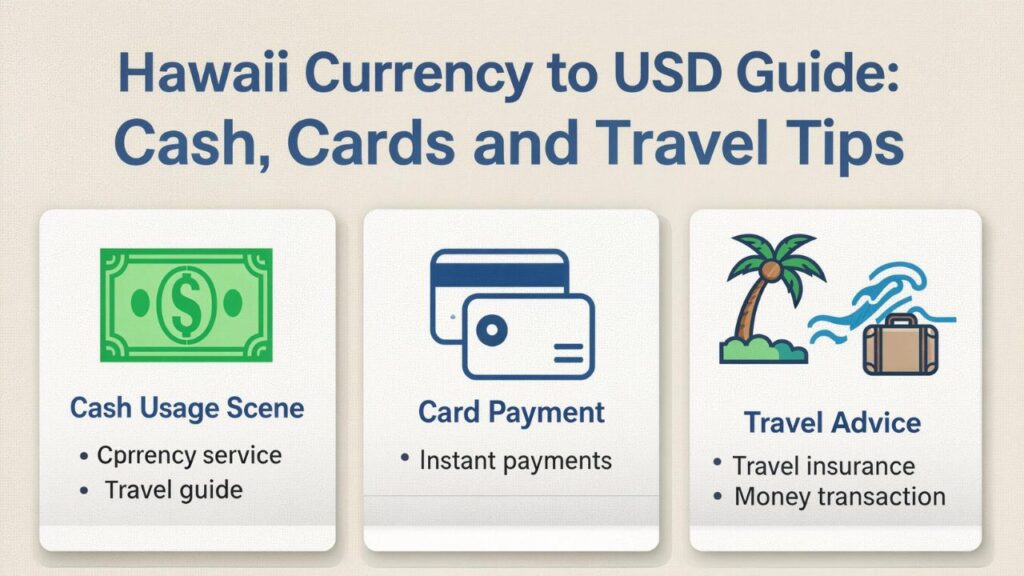
The phrase hawaii currency to usd can sound like there is a special Hawaiian currency that must be converted into U.S. dollars. In reality, there is no separate modern “Hawaii dollar” for visitors to exchange. The currency used in Hawaii is the U.S. Dollar, often written as USD and shown with the $ symbol.
That means a $20 bill in Honolulu has the same value as a $20 bill in Los Angeles, New York, Dallas, or Miami. You do not need to convert Hawaiian money into American money once you arrive, because it is already American money.
Travel guides consistently state that Hawaii uses the U.S. Dollar as its currency, and common U.S. notes and coins are used throughout the islands.
Is There a Separate Hawaiian Currency?
No, not for everyday travel. Hawaii once had a complex monetary history before and during its transition into U.S. governance, but modern visitors use USD for hotels, restaurants, taxis, rental cars, tours, grocery stores, resorts, and local markets.
You may see Hawaiian-language words, cultural references, local art, or souvenirs inspired by the islands’ history, but you will not receive a separate Hawaiian currency at a restaurant or store.
Why Travelers Still Get Confused
The confusion is understandable. Hawaii is more than 2,000 miles from the U.S. mainland, has a strong local identity, and is often marketed like an international tropical destination. For travelers flying in from outside the United States, it feels natural to ask whether hawaii currency to usd involves a conversion rate.
For U.S. travelers, there is no currency conversion at all. For international travelers, the only conversion is from your home currency into USD.
How hawaii currency to usd Works for Visitors
For American travelers, hawaii currency to usd is straightforward: you can use the same dollars, debit cards, credit cards, and mobile wallets you use at home. Your bank may still charge certain ATM fees depending on the machine and your account, but there is no foreign exchange rate between Hawaii and the rest of the United States.
For international travelers, Hawaii works like any other U.S. destination. You will need USD for cash purchases, card payments will be charged in U.S. dollars, and your bank or card provider will handle the exchange from your home currency.
What Currency Should You Bring to Hawaii?
Bring U.S. Dollars. If you are traveling from the mainland United States, you can use the cash already in your wallet. If you are coming from another country, exchange some money into USD before departure or withdraw USD from an ATM after arrival.
A practical mix looks like this:
- A credit card with low or no foreign transaction fees
- A debit card for ATM withdrawals
- A small amount of USD cash for arrival costs
- A backup card kept separately from your wallet
- A little extra cash for tips, markets, parking, or roadside food stops
Hawaii is card-friendly, but cash still makes some moments easier.
Cash, Cards, and Mobile Payments in Hawaii
Most hotels, restaurants, supermarkets, shopping centers, tour operators, gas stations, and rental car companies in Hawaii accept major credit and debit cards. Visa and Mastercard are the safest options, while American Express and Discover are accepted in many places but not always everywhere.
Mobile payments such as Apple Pay and Google Pay are also common in larger businesses, especially around Honolulu, Waikiki, resort areas, airports, malls, and popular restaurants. Smaller food trucks, farmers markets, roadside stands, beach parking areas, and local vendors may prefer cash or have minimum card purchase amounts.
When Cash Is Useful
Even though Hawaii is modern and card-friendly, carrying some USD cash is smart. You may need cash for:
- Tipping hotel staff or shuttle drivers
- Buying fruit, snacks, or crafts from small vendors
- Paying at local markets
- Parking lots or older meters
- Small cafés or food trucks
- Emergency backup if your card is declined
- Splitting costs with travel companions
You do not need to carry a huge amount. In many cases, $100 to $200 in smaller bills is enough for the first few days, depending on your travel style.
Best Bill Denominations to Carry
Small bills are more useful than large ones. Bring $1, $5, $10, and $20 bills. A $100 bill may be accepted at larger stores, but smaller vendors may not want to break it.
Common U.S. banknotes include $1, $5, $10, $20, $50, and $100 bills, while coins include pennies, nickels, dimes, quarters, half-dollars, and dollar coins, although some are rarely used in daily purchases. (My Hawaii)
Currency Exchange in Hawaii
If you are arriving from another country, you can exchange money before traveling, use an ATM in Hawaii, or visit a currency exchange provider after arrival. Airports, banks, hotels, and exchange counters may offer currency services, but fees and rates can vary.
The official Hawaii tourism guidance suggests exchanging some currency before travel so you have cash for cab fare and incidental expenses, while also noting that ATMs are a simple way to access cash in Hawaiʻi.
Should You Exchange Money Before You Arrive?
It is usually wise to arrive with a small amount of USD already in hand. You do not need your full vacation budget in cash, but having enough for your first day can reduce stress.
For example, after a long flight, you may want to pay for a taxi, tip a driver, buy water, grab food, or handle a small unexpected cost before finding an ATM.
Airport Currency Exchange: Convenient but Often Costly
Airport exchange counters are convenient, but they may not offer the best rates. They are useful if you arrive with no USD at all, but they should not be your main strategy unless convenience matters more than cost.
A better plan is often to use a low-fee debit card at a bank ATM or exchange a modest amount before leaving your home country.
ATMs in Hawaii
ATMs are widely available in Hawaii, especially on Oʻahu, Maui, Kauaʻi, and Hawaiʻi Island. You will find them at airports, banks, hotels, convenience stores, shopping centers, and tourist areas.
The easiest way to withdraw money is usually through a bank ATM. Independent ATMs in hotels, bars, convenience stores, or tourist-heavy areas may charge higher fees.
ATM Tips for International Travelers
Before you travel, check whether your debit card works in the United States and whether your bank charges international withdrawal fees. Also ask whether your bank has partner networks that reduce ATM costs.
When an ATM asks whether you want to be charged in your home currency or USD, choosing USD is often better because your own bank or card network usually provides a more competitive conversion than dynamic currency conversion. This can vary, but the “pay in local currency” rule is a useful travel habit.
Safety Tips When Withdrawing Cash
Use ATMs in well-lit, secure areas. Bank branches, airport machines, and indoor shopping centers are usually better choices than isolated outdoor machines late at night.
Cover the keypad, put cash away before walking off, and avoid withdrawing more than you need. Hawaii is generally welcoming, but normal travel awareness still matters.
Understanding Prices in Hawaii
One reason people research hawaii currency to usd is that prices in Hawaii can feel higher than expected. The currency may be the same as the mainland United States, but the cost of goods and services can be noticeably different.
Hawaii is remote, and many goods are shipped long distances. Hotels, restaurants, groceries, rental cars, fuel, and activities can cost more than travelers expect, especially in resort areas.
Why Hawaii Can Feel Expensive
Several factors influence prices:
- Shipping costs for imported goods
- High demand in popular tourist zones
- Limited land and high operating costs
- Resort fees and parking charges
- Seasonal travel demand
- Island-to-island transportation costs
A simple lunch, grocery run, or taxi ride may cost more than it would in many mainland cities. Budgeting in USD does not mean budgeting at mainland prices.
Sample Everyday Costs to Plan For
Prices vary by island, season, and neighborhood, but visitors should plan for higher-than-average spending in major tourist areas. A casual meal, coffee, parking fee, beach gear rental, or convenience-store purchase can add up quickly.
Instead of only focusing on exchange rates, think about daily spending categories: food, transport, tips, activities, souvenirs, resort fees, and emergency extras.
Tipping in Hawaii
Tipping in Hawaii follows general U.S. customs. If you are visiting from a country where tipping is uncommon, this is one of the most important money habits to understand.
Restaurant servers, bartenders, valets, hotel staff, tour guides, shuttle drivers, spa workers, and housekeeping staff may all commonly receive tips.
Common Tipping Guidelines
A helpful starting point:
- Restaurants: 18% to 20% for good service
- Bars: $1 to $2 per drink or 15% to 20%
- Taxi or rideshare drivers: 10% to 20%
- Hotel housekeeping: $3 to $5 per night
- Valet: $3 to $5 when the car is returned
- Tour guides: 10% to 20%, depending on service
- Bell staff: $1 to $2 per bag
Tipping is not just a bonus in many service settings. It is part of how workers are commonly compensated in the U.S. hospitality industry.
Cash Tips vs Card Tips
Card tips are common at restaurants and cafés, but cash tips are useful for hotel staff, shuttle drivers, luggage help, housekeeping, and small service moments. Keep a few $1 and $5 bills handy.
Using Credit Cards Wisely
Credit cards can be the easiest and safest way to pay in Hawaii. They reduce the need to carry lots of cash, offer purchase protection, and may include travel perks such as rental car insurance or rewards points.
For international travelers, the best card is usually one with no foreign transaction fees. Even though Hawaii uses USD, your card issuer may still charge a foreign transaction fee if your account is based outside the United States.
Watch for Foreign Transaction Fees
A foreign transaction fee is often around 1% to 3% of the purchase, depending on your bank or card provider. That may sound small, but it can become expensive over a week or two of hotels, meals, tours, and shopping.
Before your trip, check your card terms. A travel-friendly card can save money every day.
Dynamic Currency Conversion
Sometimes a card machine may offer to charge you in your home currency instead of USD. This may seem convenient because you can see the amount in familiar terms, but the exchange rate is often less favorable.
When paying in Hawaii, international visitors are usually better off choosing USD and letting their card network handle the conversion.
Debit Cards and Prepaid Travel Cards
Debit cards are useful for ATM withdrawals, but they are not always ideal for hotel deposits, rental car holds, or large travel purchases. Hotels and car rental companies may place temporary holds on your account, which can tie up your available balance.
Prepaid travel cards can help with budgeting, but they may include reload fees, ATM fees, inactivity fees, or less favorable exchange rates. Read the fine print carefully.
Best Payment Setup for a Hawaii Trip
A balanced setup is usually best:
- One primary credit card for hotels, dining, tours, and rental cars
- One debit card for ATM withdrawals
- One backup card stored separately
- A small amount of USD cash
- Digital wallet enabled on your phone
This mix gives you flexibility without carrying too much money.
Budgeting for Hawaii in USD
Because hawaii currency to usd does not require conversion for U.S. travelers, budgeting may seem easy. But the real challenge is estimating how much you will spend once you are there.
Think in daily categories. Lodging, food, transportation, activities, tips, and extras should each have their own rough budget. This makes it easier to adjust your plans without feeling restricted.
Food and Dining Budget
Food costs can vary dramatically. You can spend a lot at resort restaurants, but you can also save by visiting local plate lunch spots, food trucks, grocery stores, farmers markets, and casual cafés.
A smart approach is to mix experiences. Enjoy a few special meals, but balance them with simple breakfasts, beach snacks, and local casual food.
Transportation Budget
Transportation depends heavily on your island and itinerary. Oʻahu has more public transportation options, while Maui, Kauaʻi, and Hawaiʻi Island often require rental cars for flexibility.
Remember to include fuel, parking, hotel parking fees, rideshares, airport transfers, and possible inter-island flights.
Activity Budget
Tours and activities can be major expenses. Snorkeling trips, helicopter rides, luaus, surf lessons, whale watching, guided hikes, and boat tours can be memorable but costly.
Book the experiences that matter most to you, then leave room for free or low-cost activities like beaches, scenic drives, public gardens, local walks, and sunrise viewpoints.
Money Mistakes to Avoid in Hawaii
Many travelers do not lose money through one huge mistake. They lose it through small, repeated choices: bad exchange rates, too many ATM fees, resort markups, unnecessary airport purchases, and poor planning.
The goal is not to be cheap. The goal is to spend your money on the experiences that actually make the trip better.
Avoid Carrying Only Large Bills
Small vendors may not want to break $100 bills. Carry smaller denominations for tips, snacks, and casual purchases.
Avoid Depending on One Card
Cards can be blocked, lost, damaged, or declined. Always bring a backup payment method, especially if you are traveling internationally.
Avoid Last-Minute Currency Exchange
Last-minute exchange at airports or hotels can be convenient but expensive. Compare options before your trip or use a trusted ATM after arrival.
Avoid Ignoring Resort Fees
Some hotels charge daily resort fees, parking fees, or destination fees. These are charged in USD and can significantly change your total trip cost.
Currency Tips by Traveler Type
Different travelers need different money strategies. A honeymoon couple staying at a luxury resort will not spend the same way as a backpacker, family, solo traveler, or cruise passenger.
For U.S. Mainland Travelers
You do not need to exchange money. Bring your usual cards, some cash, and a realistic budget. Check whether your bank has fee-free ATMs in Hawaii.
For Canadian Travelers
You will be paying in USD, so watch the CAD-to-USD exchange rate before your trip. A no-foreign-fee credit card and a low-fee ATM card can help reduce costs.
For Australian and New Zealand Travelers
Because flights are long and Hawaii is a major international destination, it helps to arrive with some USD cash. Use cards wisely, choose USD on payment terminals, and check international fees.
For Japanese Travelers
Japanese visitors are common in Hawaii, especially on Oʻahu. Many tourist areas are familiar with international cards, but USD cash is still helpful for tips, taxis, small shops, and markets.
For European and UK Travelers
Plan for USD payments everywhere. Check whether your bank charges foreign transaction fees, and avoid card terminals that offer to convert the purchase into euros or pounds at checkout.
Local Spending Etiquette
Money in Hawaii is not just about exchange rates and payments. Local etiquette matters too. Be respectful at small businesses, tip fairly where expected, and remember that many local communities deal with high living costs.
Buying from local restaurants, farmers markets, artists, and family-run shops can make your spending feel more meaningful. It also gives you a richer experience than only shopping at large resort chains.
Support Local When Possible
Look for locally owned cafés, craft markets, cultural tours, and food stands. Ask respectfully, be patient, and do not haggle aggressively in settings where prices are clearly marked.
Keep Cash for Rural Areas
If you drive to quieter parts of an island, cash can become more useful. Some small stops may have limited card service, especially if connectivity is weak.
FAQ
Do I need to convert hawaii currency to usd before traveling?
No, not if you already have U.S. Dollars. Hawaii uses USD, so U.S. travelers do not need currency conversion. International travelers should convert their home currency into USD.
What is the official currency of Hawaii?
The official currency of Hawaii is the United States Dollar. Hawaii is a U.S. state, so USD is used for everyday payments.
Can I use my U.S. dollars in Hawaii?
Yes. U.S. dollars are accepted everywhere in Hawaii, just as they are in other U.S. states.
Are credit cards accepted in Hawaii?
Yes, major credit cards are widely accepted at hotels, restaurants, stores, tour companies, and rental car agencies. Still, carrying some cash is helpful.
Should I bring cash to Hawaii?
Yes, bring some cash in small bills. It is useful for tips, local markets, food trucks, parking, and small purchases.
Is Hawaii expensive compared with the mainland U.S.?
Often, yes. Many goods are shipped to the islands, and tourist areas can be costly. Budget more than you might for many mainland destinations.
Can I use foreign currency in Hawaii?
Generally, no. Businesses expect payment in USD. Some exchange services may accept foreign currency, but shops and restaurants usually will not.
Is it better to exchange money before arriving in Hawaii?
It is smart to arrive with some USD for immediate expenses. For the rest of your trip, a low-fee ATM card or travel-friendly credit card may offer better value.
Do ATMs in Hawaii give U.S. Dollars?
Yes. ATMs in Hawaii dispense U.S. Dollars.
How much cash should I carry each day?
Many travelers are comfortable carrying $50 to $150 per day in small bills, depending on plans. Use cards for larger purchases and keep backup cash separate.
Conclusion
Understanding hawaii currency to usd is easier than it first appears. Hawaii uses the U.S. Dollar, so there is no special island currency to exchange, no separate Hawaii exchange rate, and no extra conversion step for U.S. travelers.
The smarter question is how to pay well once you arrive. Bring a mix of cards and cash, use small bills for tips and local vendors, avoid poor exchange rates, choose USD on card machines, and budget for Hawaii’s higher everyday costs.
With the money side handled, you can focus on what you really came for: ocean views, warm sunsets, unforgettable food, island culture, and the feeling that Hawaii somehow slows time down in the best possible way.