I remember sitting in a coffee shop back in 2018, overhearing a guy at the next table try to convince his friend to drop $5,000 into a new crypto token. “It’s a security token, bro,” he said. “It’s backed by a real hotel in Manhattan. Actual bricks and mortar.” The friend looked skeptical—and back then, he was right to be. The whole concept felt half-baked, wrapped in legal gray areas, and the infrastructure just wasn’t there. Fast forward to today, and that conversation would feel almost mundane. Security tokens aren’t some fringe experiment anymore. They’re a regulated, multi-billion-dollar bridge between traditional finance and the blockchain, and if you’re here asking what is a security token, you’re already on the right track.
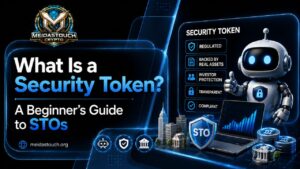
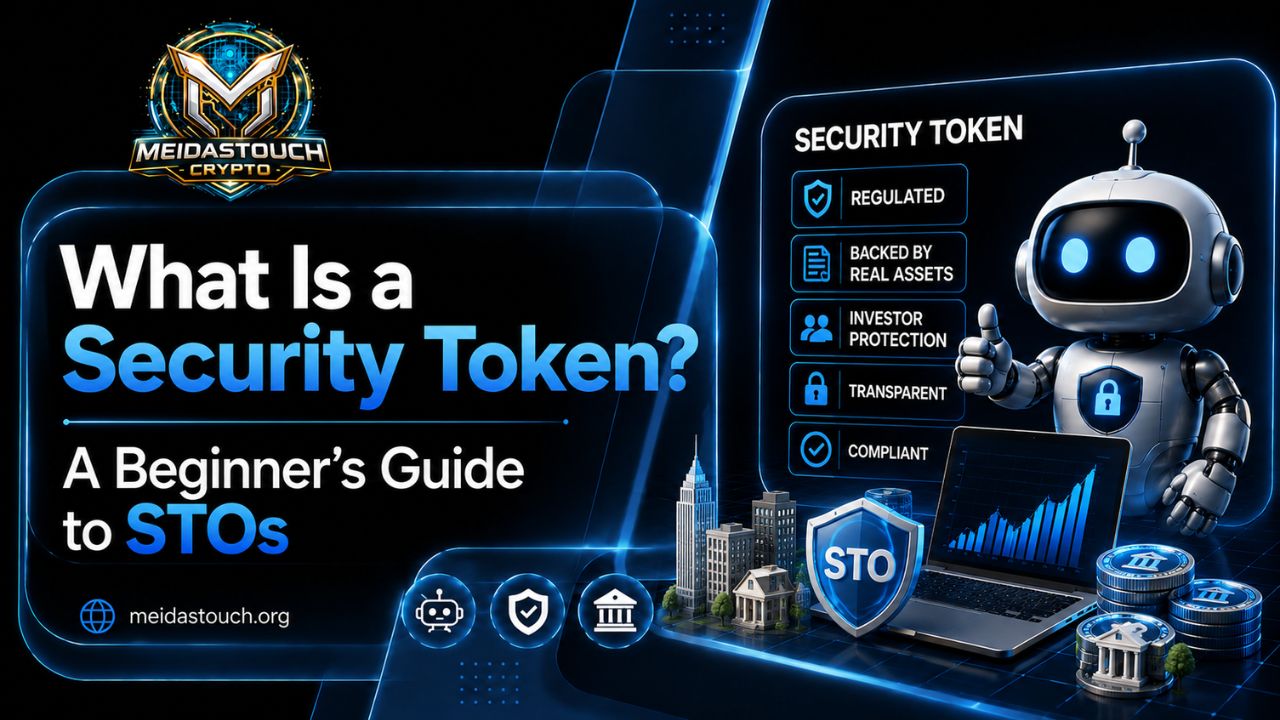
So let’s cut through the jargon and answer that question in a way that actually makes sense. A security token is a digital representation of ownership in a real-world asset—like equity in a company, a share of a real estate property, a slice of a fine art collection, or even a debt instrument—recorded on a blockchain. Unlike the utility tokens you might have traded on Binance that give you access to a dApp or a game, a security token comes with legal rights. Dividends, profit shares, voting power, interest payments. It’s an investment contract, tokenized. That distinction matters enormously, and I’ll break down exactly why.
But before we go further, let’s be clear on one thing: what is a security token is a question that cuts to the heart of where crypto meets regulation. If you can wrap your head around this, you’ll understand why Wall Street giants like BlackRock and Goldman Sachs are suddenly so interested in tokenization, and why the next wave of capital markets might just run on smart contracts. I’ll walk you through everything—how these tokens work, what security token offerings really look like, where to find security token offering services, and how you can spot a legitimate security token offering versus a dressed-up ICO. I’ll even explain what STO means for your portfolio, because that’s the question everyone Googles at 2 a.m.
The Core Definition: So, What Is a Security Token?
Let’s get legal for a second—not because I enjoy boring you, but because the legal framework is the whole point. In the United States, the SEC uses something called the Howey Test to decide whether an asset qualifies as a security. If a transaction involves an investment of money in a common enterprise with an expectation of profit derived primarily from the efforts of others, it’s a security. It doesn’t matter if it’s a piece of paper, a digital token, or a handshake deal. And when a digital token passes that test, you’re looking at a security token.
Now, many people think what is a security token has a simple tech answer—“it’s a token on Ethereum”—but the real answer is regulatory. The blockchain part is just the record-keeping layer. The critical bit is that the token embeds ownership rights and compliance rules directly into its code. That’s the magic. A security token can automatically enforce who can hold it, when dividends get paid, and how voting works, without a custodian bank needing to manually reconcile spreadsheets.
I’ve talked to founders who spent years trying to tokenize their company equity only to realize that the tech was easy but the legal side was a minefield. That’s why you see entirely separate stacks of security token offering services that help issuers navigate the rules. The token itself is programmable, but the offering process still demands proper registration or an exemption like Reg D, Reg A+, or Reg S. So if you hear someone say “we’re doing a tokenized stock,” you now know it lives under that security umbrella.
Security Tokens vs. Utility Tokens: Why the Label Matters
If you’re new to this, the line between security and utility can feel blurry. I’ve put together a comparison table to make it stick. Once you internalize this, you’ll never mix them up again.
| Feature | Security Token | Utility Token |
|---|---|---|
| Primary Purpose | Represent ownership / investment | Grant access to a product/service |
| Legal Status | Subject to securities laws | Typically unregulated (if truly utility) |
| Value Driver | Underlying asset performance | Platform usage & demand |
| Examples | Tokenized equity, real estate shares | Exchange tokens (BNB), game credits |
| Investor Expectation | Profit, dividends, voting rights | Network utility, access rights |
| Regulatory Oversight | SEC, FINRA, ESMA, etc. | Varies, often under scrutiny |
| Transferability | Restricted by whitelists & lockups | Freely transferable |
I’ve seen far too many projects label their token a “utility” to dodge regulations, only to get slapped with an enforcement action two years later. The SEC has made it painfully clear that if it quacks like a security, it is one. That’s why security token offerings have become the compliant way to raise capital on-chain. Instead of pretending you’re selling digital access keys, you acknowledge you’re selling an investment and you follow the rules. Honesty, in this case, is both cheaper and safer.
The takeaway? When someone asks what is a security token, the simplest comparison is: a utility token is like a pre-purchased arcade token you use inside a specific machine, while a security token is a share of stock in the entire arcade. One gives you the right to play; the other gives you a claim on the profits.
How Security Tokens Actually Work Under the Hood
Alright, let’s peek at the technology without drowning in code. Most security tokens are built on permissioned or semi-permissioned blockchain frameworks. While Ethereum’s ERC-20 standard is popular, true security tokens often use specialized standards like ERC-1400, ERC-3643 (the T-REX protocol), or Polymesh, a blockchain built entirely for regulated assets. These standards bake identity verification, transfer restrictions, and corporate actions into the token itself.
Here’s a concrete example. Let’s say a real estate firm issues a security token offering for a commercial building in Chicago. Each token represents 1/100,000th of the equity. The smart contract knows that only accredited investors (verified via a whitelist) can hold the token. It automatically pays rental income distributions to token holders every quarter in USDC. And if you try to send that token to an unverified wallet, the transfer simply fails. No messy legal letters; the code enforces compliance.
This is why the term what STO (short for Security Token Offering) means so much more than just “crowdfunding on blockchain.” An STO isn’t a free-for-all. It’s a regulated primary issuance that typically involves broker-dealers, transfer agents, and cap table management providers working together. When you participate in a security token offering, you’re entering a process that mirrors an IPO, just with fewer intermediaries and faster settlement.
I spent a few hours playing with the Securitize dashboard a while back, and I was struck by how familiar it felt. Fill in your investor profile, upload your KYC documents, get accredited, then browse live offerings. Buy the token, and it shows up in your wallet—not as a generic ERC-20, but as a token with a little “verified” badge. That’s the layer most people don’t see: the on-chain identity management that makes the whole thing legally sound.
What Is a Security Token Offering (STO)? Breaking Down the Process
If you’ve landed on this page typing what sto, you’re probably trying to connect the acronym to the real-world fundraising event. So let’s walk through it step by step. A security token offering is the process by which a company raises capital by issuing digital securities to investors on a blockchain. It’s the regulated evolution of the ICO (Initial Coin Offering), but with actual investor protections.
The typical STO journey goes like this:
- Preparation and Legal Structuring: The issuer hires a law firm to determine the appropriate exemption (Reg D, Reg A+, Reg S) and draft the private placement memorandum.
- Tokenization Platform Selection: The issuer picks a security token offering services provider like Securitize, Tokeny, or Polymath to handle the technical side—token creation, whitelist management, and compliance checks.
- Investor Onboarding: Potential investors go through KYC/AML verification and accreditation checks, often through integrated services like Onfido or Jumio.
- Marketing and Roadshow: Unlike an ICO’s wild Telegram hype, STO marketing targets institutional and accredited investors with cold emails, broker networks, and actual pitch decks.
- Primary Sale and Distribution: Investors send fiat or stablecoins (USDC, USDT) and receive security tokens directly to their whitelisted wallets.
- Secondary Trading: Tokens can be listed on regulated alternative trading systems (ATS) like tZERO or OpenFinance, allowing liquidity within a compliant environment.
I’ve seen security token offerings range from $2 million real estate deals to $100 million fundraises for tech startups. One that stuck with me was the Aspen Coin STO back in 2018—it raised $18 million for a stake in the St. Regis Aspen Resort. It was messy and early, but it proved the concept. Today, platforms handle the entire thing with enterprise-grade polish.
You’ll often hear people ask what STO stands for, and I always tell them the “S” is the most important letter. Security. That’s the commitment that the token isn’t a speculative meme—it’s a contract backed by law.
The Role of Security Token Offering Services
If you’re a company thinking about launching your own security token offering, you can’t just deploy a smart contract and hope for the best. You’ll need a suite of security token offering services that cover everything from technology to broker-dealer support. This is a specialized niche, and the providers here are far different from the ICO marketing mills of 2017.
Here are the core security token offering services I see serious issuers using:
- Token Issuance Platforms: Securitize, Tokeny, and Polymath provide white-label solutions to mint compliant tokens, manage cap tables, and handle corporate actions like dividends or voting.
- Broker-Dealer Networks: Because securities can’t be sold to the public without proper licenses, platforms like tZERO and Entoro act as regulated intermediaries.
- Custody Solutions: Institutional investors demand qualified custody. BitGo, Anchorage, and Copper offer insured storage for security tokens.
- Legal and Compliance Advisory: Firms like DLx Law or Goodwin Procter’s blockchain practice specialize in structuring STOs across jurisdictions.
- Secondary Market Venues: Once tokens are issued, they need a place to trade. tZERO’s ATS, MERJ Exchange in the Seychelles, and the SIX Digital Exchange in Switzerland are pioneering this.
When I talk to founders who have gone through a security token offering, they all say the same thing: don’t skimp on the security token offering services stack. A slick token launch that accidentally sells to non-accredited investors can unravel your company in a single SEC sweep. The compliance layer is not optional.
Why Security Tokens Matter: Benefits for Investors and Issuers
I’m not a maximalist, but I do think security tokens solve genuine structural problems in private markets. Let me lay out the benefits without any hype.
For Investors:
- Fractional Ownership: You can own a $10,000 slice of a $50 million building instead of buying the whole thing.
- Liquidity: Private equity and real estate are notoriously illiquid. Tokenization opens the door to 24/7 secondary markets, even if they’re still nascent.
- Transparency: On-chain cap tables and automated distributions mean you don’t have to trust a general partner’s quarterly PDF.
- Access: Many STOs let smaller cheque investors into deals previously reserved for family offices, though still within regulatory limits.
- Faster Settlement: T+0 or T+1 settlement beats the traditional T+2 mess.
For Issuers:
- Global Investor Base: Reg S offerings can reach non-US investors efficiently.
- Automated Compliance: Programmable transfer restrictions reduce administrative overhead.
- Lower Costs: Removing layers of intermediaries can shrink issuance costs by 30-50% on some estimates I’ve seen from Securitize’s case studies.
- Improved Cap Table Management: No more messy Excel sheets; the blockchain is the golden source.
I have a friend who invested in a tokenized venture fund last year. He gets quarterly distributions straight to his wallet, and he can see every underlying portfolio company’s performance on a dashboard. He says it feels like public market transparency, but for private assets. That’s the promise.
Risks and Challenges You Can’t Ignore
Before you transfer your IRA into tokenized real estate, let me run through the risks. I’m a realist, and I’ve watched enough projects stall to know the road is bumpy.
- Regulatory Uncertainty: While the SEC has provided guidance, the rules are still evolving. A change in administration or a high-profile enforcement action could shift the landscape overnight.
- Liquidity Illusion: Yes, security tokens can trade, but the secondary market is thin. You might be able to buy a token, but selling it in a hurry without massive slippage? That’s a different story.
- Technology Risk: Smart contracts get hacked. Custody solutions can fail. Multi-sig wallets can be mismanaged. Audits are vital, but they aren’t ironclad.
- Issuer Quality: Just because something is a security token offering doesn’t mean the underlying business is any good. Bad real estate is still bad real estate, token or not.
- Valuation Complexity: Tokenized private assets don’t have a deep order book. Mark-to-market pricing often relies on stale appraisals.
I always tell people to treat security tokens the same way they’d treat any private placement. Would you invest in this if it were a traditional paper contract? If the answer is no, the blockchain wrapper won’t save you.
How to Invest in Security Tokens: A Practical Walkthrough
So you understand what is a security token and you’re ready to dip a toe in. The process isn’t as streamlined as buying Bitcoin on Coinbase, but it’s not rocket science either.
- Set Up a Compliant Wallet: You’ll need a wallet that supports security token standards (ERC-1400, etc.) and, ideally, integrates identity verification. I’ve used the Securitize wallet and also MetaMask with the token’s whitelist module.
- Get Verified: Create an account on an issuance platform and complete KYC. If you’re in the US, you’ll likely need to prove accredited investor status—think $200k+ income or $1M net worth.
- Fund Your Account: Most platforms accept stablecoins (USDC, USDT) or wire transfers. Some, like tZERO, let you connect a bank account.
- Browse Offerings: Look at current security token offerings on platforms like Securitize Markets, INX, or the tZERO ATS. Read the offering memorandum. Yes, actually read it.
- Make Your Purchase: Choose the amount, confirm the transaction, and the security token will appear in your wallet after the issuance closes.
- Track and Manage: Use the issuer’s dashboard to see your ownership, distributions, and any voting events.
One piece of practical advice: start small. Pick a real estate token or a fund that has a track record of distributions, and treat it as a learning experience. I put $2,000 into a tokenized income fund last year just to see how the mechanics worked. The return wasn’t life-changing, but the education was worth it.
The Future of Security Tokens: Where We’re Headed
If I look forward to 2026 and beyond, I see security tokens quietly eating into the massive $10 trillion private securities market. It won’t happen overnight, but the forces are aligned. BlackRock’s tokenized money market fund BUIDL has already shown the blueprint: public blockchain rails, regulated tokens, 24/7 settlement. And that’s just the beginning.
We’re starting to see security token offerings expand beyond real estate and into venture capital, private credit, fine art, and even sports team ownership. The concept of “fractionalizing everything” has been a crypto meme for years, but with proper regulatory wrappers, it’s inching closer to reality.
Interoperability is the next big hurdle. Today, a token issued on Polymesh might not seamlessly trade on tZERO’s ATS. Industry groups like the Global Digital Asset Trade Association are working on shared standards, but we’re not there yet. When the plumbing connects, liquidity will follow.
I also think we’ll see more embedded finance use cases. Imagine earning yield in a DeFi protocol that’s actually collateralized by real-world security tokens. Or using your tokenized real estate shares as collateral for a loan, all executed automatically by smart contracts. That vision is technically possible now; it just needs the regulatory green light and the institutional stamp of approval.
Don’t be surprised if, in five years, the term what sto becomes as common as “what IPO.” In fact, some of the largest IPOs might just be conducted as STOs on chain, with retail investors getting allocation via their brokerage apps without even realizing they’re holding tokens.
Frequently Asked Questions
What is a security token in simple terms?
A security token is a digital asset on a blockchain that represents ownership in a real-world investment, like stock in a company or a share of a property. It comes with legal rights and must follow securities regulations.
What is the difference between a security token and a utility token?
A security token is an investment contract and is regulated, giving holders rights like dividends or profit shares. A utility token gives access to a product or service and typically isn’t considered a security if properly structured.
What does STO stand for, and how is it different from an ICO?
STO stands for Security Token Offering. Unlike an ICO, which often sold unregulated utility tokens, an STO is a regulated fundraising process that complies with securities laws and provides investor protections.
Are security tokens a good investment?
They can be, but like any private placement, they carry risk. They offer fractional ownership and potential liquidity, but the market is still young, and many assets are illiquid. Due diligence on the underlying asset is essential.
How do I find security token offerings to invest in?
You can browse security token offerings on regulated platforms like Securitize Markets, tZERO, and INX. You’ll need to complete KYC and, in many cases, prove accredited investor status.
Can I trade security tokens on any exchange?
No. Security tokens typically trade on licensed alternative trading systems (ATS) or regulated exchanges, not on open DEXs like Uniswap. This ensures compliance with investor restrictions.
What is the minimum investment for an STO?
It varies. Some security token offering minimums are as low as $500, while others target institutional investors with $100,000+ requirements. Always check the offering terms.
Is a security token the same as a NFT?
Not typically. While an NFT can represent ownership of an asset, most NFTs are not structured as securities. However, if an NFT promises profit from the efforts of others, it could be deemed a security.
How do dividends work with security tokens?
Dividends or profit distributions are usually programmed into the token’s smart contract. They can be paid in stablecoins directly to your wallet on a set schedule, with the amounts calculated automatically based on your token holdings.
What happens if I lose my wallet keys?
Just like with any crypto wallet, losing your private keys means losing access to your security tokens. Some custodial wallets offer recovery options, but self-custody demands personal responsibility.