Article
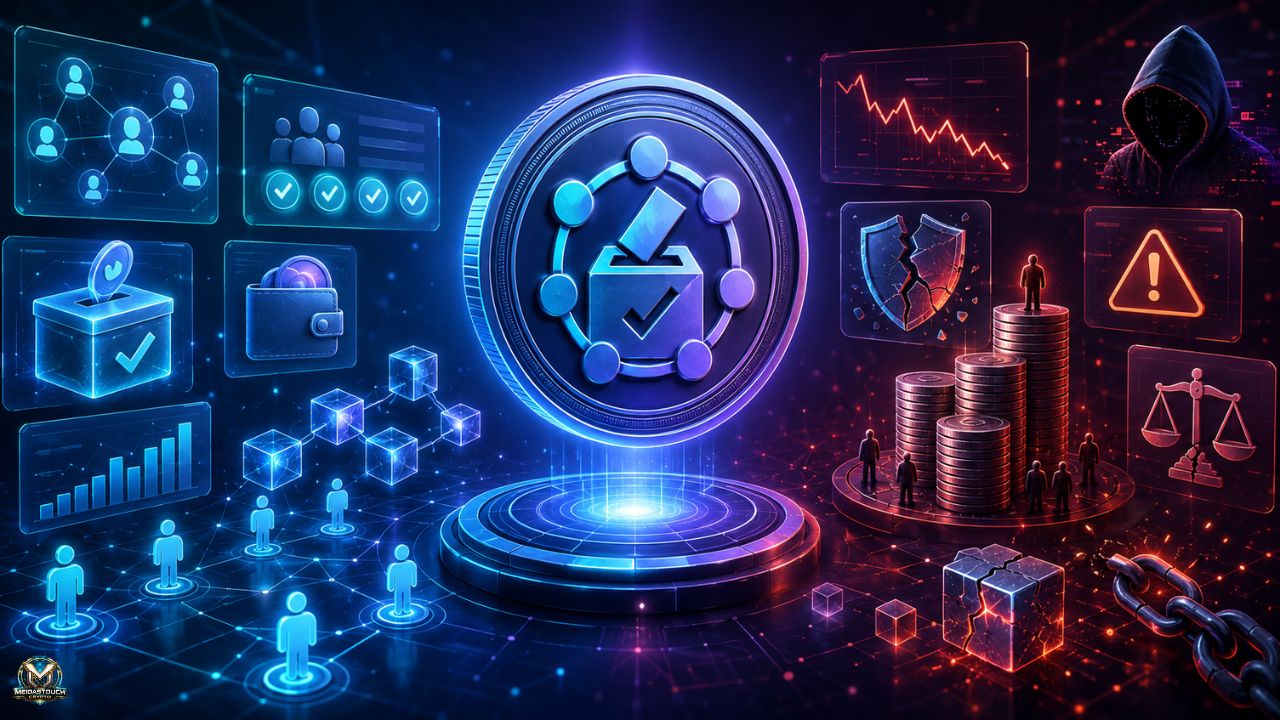
If you have spent any time reading about crypto, DeFi, or Web3 projects, you have probably seen people talk about “voting with tokens.” That usually leads to one big question: what is a governance token, and why does it matter?
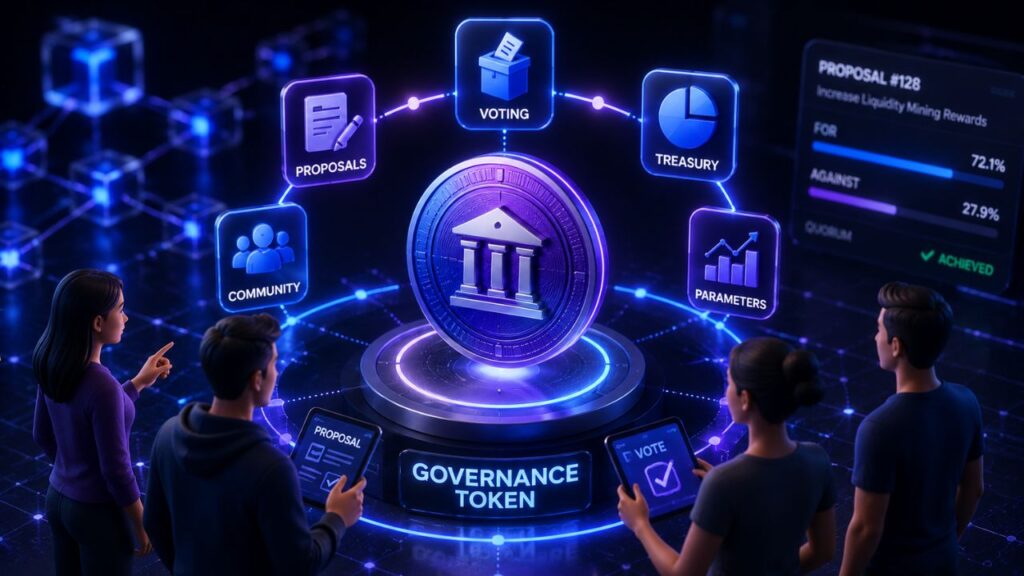
A governance token is a type of crypto token that gives holders the ability to participate in decisions about a blockchain project, decentralized protocol, or DAO. In simple terms, it is often used like a voting pass. Instead of a company board making every decision behind closed doors, a project may allow token holders to vote on proposals that affect the future of the protocol.
That sounds simple, but governance tokens can be surprisingly complex. They may influence fee structures, software upgrades, treasury spending, grant programs, token incentives, partnerships, and risk settings. They may also carry financial risk because many governance tokens trade on crypto markets, where prices can be highly volatile.
This guide explains how governance tokens work, why projects use them, how voting usually happens, what the benefits and risks are, and what beginners should understand before buying or using one.
This article is for educational purposes only and is not financial, legal, or tax advice. Crypto assets can be volatile, regulations may change, and every project has its own rules. Always do your own research and consider speaking with a qualified professional before making financial decisions.
Governance Token Meaning in Simple Terms
A governance token is a digital asset that gives holders some level of decision-making power within a crypto project.
In traditional companies, decisions are usually made by executives, directors, or shareholders. In many Web3 projects, decisions may be made through decentralized governance, where token holders can vote on proposals.
For example, a project might ask token holders to vote on whether to:
- Change protocol fees
- Fund a developer grant
- Add a new collateral asset
- Adjust reward emissions
- Upgrade smart contracts
- Change treasury management rules
- Elect council members or delegates
- Approve a new partnership
The exact rights depend on the project. Holding a governance token does not automatically mean you own part of a company, receive profits, or have legal shareholder rights. In many cases, it simply means you can participate in a project’s governance process.
How Governance Tokens Work
Most governance tokens work through a combination of wallets, proposals, voting systems, smart contracts, and community discussion.
Here is the basic flow.
1. A User Holds the Token
To participate, a person usually needs to hold the project’s governance token in a compatible crypto wallet. Some projects require a minimum amount of tokens to vote, create proposals, or delegate voting power.
2. A Proposal Is Created
A proposal is a formal suggestion for changing something about the project. It might come from a developer, token holder, DAO contributor, foundation, delegate, or community member.
A proposal usually explains:
- What change is being requested
- Why the change matters
- How it would be implemented
- What risks or trade-offs exist
- What resources are needed
- When the vote will happen
3. The Community Discusses the Proposal
Before voting, many projects use community forums, Discord servers, governance platforms, or public calls to debate the idea.
This discussion stage matters because voters need context. A proposal can look attractive at first but may have hidden technical, financial, security, or legal concerns.
4. Token Holders Vote
Once the proposal reaches the voting stage, token holders can usually vote “yes,” “no,” or sometimes “abstain.” In many systems, more tokens mean more voting power.
Some projects allow direct voting. Others use delegation, where token holders assign their voting power to another wallet, representative, or governance delegate.
5. The Result Is Counted
A proposal may need to meet several conditions before it passes, such as:
- A minimum number of votes
- A majority in favor
- A quorum threshold
- A waiting period
- A timelock before execution
These safeguards are designed to prevent rushed or poorly supported decisions.
6. The Decision Is Implemented
Some governance decisions are executed automatically through smart contracts. Others require developers, multisig signers, foundations, or working groups to carry out the decision manually.
This distinction is important. Not every governance vote automatically changes code. Some votes are binding, while others are signaling votes that show community preference.
Governance Tokens and DAOs
Governance tokens are closely connected to DAOs, or decentralized autonomous organizations.
A DAO is a community-led structure that uses blockchain tools to coordinate decisions, funds, and rules. Instead of relying entirely on a traditional management team, a DAO may use token voting to let members participate in governance.
In a token-based DAO, governance tokens may decide who can vote and how much voting influence each person has.
For example:
- A DeFi protocol may let token holders vote on risk parameters.
- A gaming DAO may let members vote on treasury spending.
- A creator DAO may let token holders vote on community projects.
- A grant DAO may let members vote on which builders receive funding.
However, not all DAOs work the same way. Some use one-token-one-vote systems. Others use delegated voting, reputation systems, councils, NFTs, quadratic voting, or hybrid governance models.
Real-World Examples of Governance Tokens
Governance tokens are common in decentralized finance and Web3. The details change over time, so readers should always check a project’s current governance documentation before participating.
UNI
UNI is associated with Uniswap governance. UNI holders can participate in the governance process, and voting power generally needs to be delegated before it can be used in votes.
This is a helpful example because it shows that holding a token and actively voting are not always the same thing. In some systems, you may need to delegate voting power first.
COMP
COMP is associated with Compound governance. COMP holders and delegates can participate in decisions about the protocol, including proposals and voting.
This shows how governance can be used in DeFi protocols where community decisions may affect markets, risk settings, and protocol behavior.
MKR
MKR has historically been associated with MakerDAO governance. Maker-related governance has involved decisions around collateral, stability fees, risk management, and system parameters.
This is a strong example of governance tokens being used for complex financial protocol decisions.
AAVE
AAVE is associated with Aave governance. Token holders and delegates may participate in governance related to protocol upgrades, risk decisions, and ecosystem development.
This example shows how governance tokens can become part of a broader ecosystem with technical, financial, and community decisions.
ENS
ENS governance relates to the Ethereum Name Service ecosystem. Governance may involve treasury decisions, protocol rules, community working groups, and public goods funding.
This example shows that governance tokens are not only about trading or DeFi. They can also support identity, naming, and public infrastructure projects.
What Governance Token Holders Can Vote On
The rights attached to a governance token depend on the project. Still, many governance systems focus on similar categories.
Protocol Upgrades
Token holders may vote on upgrades to smart contracts, app features, or infrastructure. These decisions can be technical and may require careful review from developers and auditors.
Fee Changes
A DeFi protocol might let token holders vote on trading fees, borrowing fees, liquidation parameters, or revenue distribution rules.
Fee decisions can be controversial because they may affect users, liquidity providers, token holders, and long-term sustainability.
Treasury Spending
Many DAOs control a treasury. Governance token holders may vote on how treasury funds are used.
Examples include:
- Developer grants
- Marketing campaigns
- Security audits
- Liquidity incentives
- Community events
- Public goods funding
- Contributor compensation
Treasury votes require careful judgment because poor spending can weaken a project over time.
Incentive Programs
Projects may use governance to decide how tokens are distributed as rewards. This can include liquidity mining, staking rewards, ecosystem grants, or user incentives.
The challenge is balancing growth with long-term token value and sustainability.
Risk Parameters
In lending protocols, governance may affect risk settings such as collateral ratios, liquidation thresholds, borrowing caps, or approved collateral assets.
These decisions can be high stakes. Poor risk management may expose users and the protocol to losses.
Governance Process Changes
Token holders may also vote on governance itself. For example, a DAO might change quorum requirements, proposal thresholds, delegation rules, or voting periods.
This is sometimes called “governing governance,” and it can shape how decentralized or efficient a project becomes.
Why Governance Tokens Matter
Governance tokens matter because they turn users, builders, investors, and community members into potential decision-makers.
In theory, this creates a more open system than traditional corporate governance. Instead of decisions being controlled only by insiders, a broader community can help guide the project.
They Give Communities a Voice
A governance token can give users a direct way to influence a protocol they rely on. For example, a frequent DeFi user may care deeply about fees, security, liquidity, and user experience.
Token voting gives that user a formal way to support or oppose changes.
They Can Support Decentralization
Many crypto projects aim to reduce reliance on a central team. Governance tokens can help move decision-making toward the community over time.
That does not guarantee true decentralization, but it can be one tool for distributing control.
They Help Coordinate Large Communities
Global crypto communities can be difficult to coordinate. Governance tokens create a structured way to propose changes, measure support, and make decisions.
Without governance systems, project decisions may happen informally, inconsistently, or behind closed doors.
They Can Align Incentives
When designed well, governance tokens may encourage users to think about the long-term health of a protocol. People who hold the token may want the project to become more useful, secure, and sustainable.
However, incentives are not always perfectly aligned. Some holders may vote for short-term price gains, personal benefit, or outside interests.
Benefits of Governance Tokens
Governance tokens can offer meaningful benefits, especially in open-source and decentralized ecosystems.
Community Participation
The biggest benefit is participation. Token holders may be able to help shape important project decisions instead of simply using the product passively.
Transparency
Many governance proposals, votes, and results are public. This can make decision-making easier to audit than private corporate discussions.
Faster Experimentation
Crypto communities can propose and test new ideas quickly. A DAO may fund developers, launch incentives, or adjust protocol settings faster than a traditional organization.
Shared Ownership Culture
Even when governance tokens do not provide legal ownership, they can create a sense of shared responsibility. Contributors may feel more invested in the project’s direction.
Open Access
Many governance systems are permissionless or semi-permissionless. In many cases, anyone who holds the token can participate, regardless of location, background, or institutional status.
Drawbacks and Limitations
Governance tokens are not perfect. In fact, some of the biggest challenges in Web3 governance come from the way these tokens are distributed, used, and traded.
Low Voter Participation
Many token holders never vote. Some are passive investors. Others do not understand the proposals. Some avoid voting because of gas fees, time, complexity, or lack of confidence.
Low turnout can allow a small group of active voters to control major decisions.
Whale Influence
A “whale” is a person or entity that holds a large amount of tokens. In one-token-one-vote systems, whales may have outsized influence.
This can make governance less democratic than it appears.
Short-Term Thinking
Because governance tokens often trade on open markets, some holders may care more about short-term price movement than long-term protocol health.
This can create pressure for decisions that look attractive now but cause problems later.
Voter Apathy
Governance can be boring, technical, and time-consuming. Many proposals involve complex details that require financial, legal, or technical understanding.
As a result, holders may delegate their votes or ignore governance entirely.
Governance Attacks
Governance systems can be attacked. For example, someone may accumulate or borrow enough tokens to push through a harmful proposal.
Projects often use safeguards such as timelocks, quorum rules, proposal thresholds, and security councils to reduce this risk.
Regulatory Uncertainty
In the United States, crypto regulation continues to evolve. Depending on the token, project structure, marketing, and rights attached to the asset, legal treatment may vary.
This is one reason governance token holders should avoid assuming that every token has the same legal status.
Governance Token vs Utility Token
Governance tokens and utility tokens can overlap, but they are not always the same.
| Feature | Governance Token | Utility Token |
|---|---|---|
| Main purpose | Voting or decision-making | Accessing a product, service, or function |
| Common use | DAO voting, proposals, protocol changes | Fees, app access, rewards, in-platform activity |
| Holder role | Participant in governance | User of a network or product |
| Value source | Market demand, governance power, ecosystem relevance | Usage demand, access needs, network activity |
| Main risk | Governance capture, low participation, regulatory uncertainty | Weak demand, limited utility, project failure |
Some tokens do both. A token may provide voting rights and also be used for fees, staking, rewards, or access.
The important point is to read the project’s documentation. Do not assume a token has governance rights just because it is part of a crypto project.
Governance Token vs Security Token
A governance token is not automatically a security token. A security token usually represents a regulated investment interest, such as tokenized shares, debt, or rights tied to financial returns.
However, the legal analysis can be complicated. In the United States, regulators may look at how a token is sold, marketed, used, and controlled.
A governance token may raise legal questions if buyers are led to expect profits based mainly on the efforts of others. The details matter, and rules may change.
For everyday readers, the practical takeaway is simple: do not assume the word “governance” makes a token legally safe, low-risk, or exempt from regulation.
Governance Token vs Company Stock
Governance tokens can look similar to company stock because both may involve voting. But they are very different.
| Feature | Governance Token | Company Stock |
|---|---|---|
| Legal ownership | Usually does not represent company ownership | Represents ownership in a corporation |
| Voting rights | Depends on protocol rules | Depends on share class and corporate law |
| Dividends | Usually no guaranteed dividends | Possible, if declared by company |
| Regulation | Varies by token and jurisdiction | Heavily regulated securities market |
| Investor protections | Often limited | More established disclosure and legal protections |
| Market access | Crypto exchanges, DEXs, wallets | Brokerages and regulated exchanges |
This distinction matters. Buying a governance token does not usually mean you own part of the company or have the same protections as a shareholder.
How Voting Power Is Usually Calculated
Most governance systems use token-based voting. That means voting power is tied to how many tokens a wallet controls or has been delegated.
One Token, One Vote
This is the simplest model. If you hold 100 tokens, you may have 100 votes. If another wallet holds 10,000 tokens, it may have 10,000 votes.
This model is easy to understand but can concentrate power among large holders.
Delegated Voting
Delegation lets token holders give their voting power to someone else without transferring ownership of the tokens.
For example, you might delegate to:
- A governance researcher
- A community delegate
- A DAO contributor
- A trusted friend
- Your own wallet
Delegation is useful for people who care about governance but do not have time to review every proposal.
Snapshot Voting
Some projects use snapshot-based voting. A snapshot records token balances at a specific block or time. This helps prevent people from buying tokens after a proposal starts just to influence the outcome.
Quadratic Voting
Quadratic voting is designed to reduce whale dominance by making additional votes increasingly expensive. It is not used everywhere, but it is one attempt to make voting more balanced.
Reputation-Based Governance
Some systems give weight to reputation, contribution history, or verified participation rather than token ownership alone.
This can reward active contributors, but it may be harder to design fairly.
How to Participate in Governance
If you already hold a governance token and want to participate responsibly, follow a careful process.
1. Read the Official Documentation
Start with the project’s official governance docs. Look for details about:
- Voting rights
- Proposal requirements
- Delegation
- Quorum
- Voting period
- Execution process
- Token lockups, if any
- Fees or gas costs
Never rely only on social media summaries.
2. Join the Governance Forum
Most serious projects have a forum where proposals are discussed before voting. Read the arguments for and against each proposal.
Pay attention to thoughtful criticism. A strong governance culture welcomes hard questions.
3. Understand the Proposal
Before voting, ask:
- What problem does this proposal solve?
- Who benefits?
- Who carries the risk?
- What happens if it fails?
- Does it affect user funds?
- Has the code been audited?
- Is there a conflict of interest?
- Are the requested funds reasonable?
If you cannot understand a proposal, it may be better to abstain or delegate to someone with relevant expertise.
4. Check Voting Requirements
Some tokens must be delegated before voting. Some votes happen on-chain and may require gas fees. Others happen off-chain through voting platforms.
Make sure you know the process before the deadline.
5. Vote or Delegate
If you are comfortable with the proposal, vote directly. If not, delegate to someone whose reasoning, transparency, and track record you trust.
Delegation is not a one-time decision forever. You can often change delegates later.
6. Track the Outcome
After voting, check whether the proposal passed and whether it was actually implemented.
Good governance does not end when the vote closes. Execution matters.
What to Look for Before Buying a Governance Token
Buying a governance token is different from simply reading about governance. Once money is involved, risk becomes much more important.
Before buying, review the project carefully.
Token Distribution
Ask who owns the supply. If insiders, venture funds, founders, or a small number of wallets control a large percentage, governance may be highly centralized.
Real Voting Activity
A project may claim to be community-governed, but the actual voting history may show low participation or repeated dominance by a few wallets.
Treasury Health
If the DAO has a treasury, review how funds are managed. A large treasury can support growth, but poor spending can drain resources.
Governance Quality
Look at past proposals. Are they thoughtful and transparent? Do voters debate risks? Are conflicts of interest disclosed?
Healthy governance is usually visible in the quality of public discussion.
Token Utility
Does the token have a clear role beyond speculation? Is governance meaningful, or is it mostly symbolic?
A token with weak utility may depend heavily on hype.
Security History
Check whether the protocol has experienced hacks, governance attacks, emergency shutdowns, or major smart contract issues.
Past problems do not always mean a project is bad, but they deserve careful review.
Regulatory Risk
US readers should be especially careful with regulatory uncertainty. Token listings, exchange access, tax treatment, and project operations may be affected by changing rules.
Personal Suitability
Even if a project is legitimate, the token may not be suitable for your situation. Consider your risk tolerance, time horizon, financial goals, and ability to lose money.
Common Mistakes Beginners Make
Governance tokens can be exciting, but beginners often make avoidable mistakes.
Mistake 1: Assuming Voting Rights Mean Ownership
A governance token usually does not mean you own a company. It may not give you dividends, legal claims, or shareholder protections.
Mistake 2: Buying Only Because a Token Is “Decentralized”
Decentralization exists on a spectrum. A project can have a governance token and still be heavily influenced by founders, insiders, whales, or foundations.
Mistake 3: Ignoring Token Supply
Token price alone does not tell you much. Review supply, emissions, unlock schedules, and distribution.
A token can fall in price if large amounts of supply enter the market.
Mistake 4: Not Reading Proposals
Voting without understanding proposals can harm the project. Governance decisions may involve technical risk, legal risk, treasury spending, or user funds.
Mistake 5: Following Influencers Blindly
Crypto influencers may have conflicts of interest. They may hold the token, receive compensation, or benefit from hype.
Use public documentation, forums, and independent research whenever possible.
Mistake 6: Forgetting Tax Implications
In the United States, buying, selling, swapping, staking, earning, or receiving tokens may create tax consequences. Tax rules can be complex, so keep records and consult a tax professional when needed.
Mistake 7: Leaving Tokens on Risky Platforms
If you hold governance tokens on an exchange, you may not be able to vote with them. You may also face custodial risk if the platform freezes withdrawals or fails.
Using a self-custody wallet gives more control, but it also puts security responsibility on you.
Costs and Practical Considerations
Participating in governance may involve costs beyond the token purchase itself.
Gas Fees
On-chain voting may require transaction fees. These fees can rise when a network is congested.
Some projects use off-chain voting tools to reduce costs, but execution may still happen on-chain.
Time Commitment
Responsible voting takes time. You may need to read long proposals, forum debates, risk reports, and technical explanations.
Wallet Security
To vote, you may need to connect your wallet to governance platforms. Always verify official links, avoid phishing sites, and consider using hardware wallets for larger holdings.
Opportunity Cost
Holding a governance token means your money is tied to that asset. If the token falls in value or becomes illiquid, exiting may be difficult.
Delegation Maintenance
If you delegate voting power, review your delegate occasionally. Their views, activity level, or conflicts of interest may change.
Are Governance Tokens Good or Bad?
Governance tokens are neither automatically good nor bad. They are tools.
A well-designed governance token can help communities coordinate, fund development, and manage protocols transparently. A poorly designed token can concentrate power, encourage speculation, or create security risks.
The quality depends on factors such as:
- Token distribution
- Proposal process
- Voter participation
- Security design
- Transparency
- Legal structure
- Community culture
- Long-term incentives
For beginners, the best approach is to treat governance tokens as high-risk crypto assets with an added decision-making function. The voting rights may be valuable, but they do not remove market risk.
Who Governance Tokens May Be Best For
Governance tokens may be suitable for people who:
- Understand crypto wallets and blockchain transactions
- Use the protocol regularly
- Want to participate in DAO decisions
- Are comfortable reading technical proposals
- Can tolerate high volatility
- Have time to follow governance discussions
- Understand that token value can fall sharply
They may be especially relevant for active DeFi users, DAO contributors, Web3 builders, crypto researchers, and community members who care about protocol direction.
Who Should Be More Careful
Governance tokens may not be a good fit for everyone.
Be cautious if you:
- Are new to crypto
- Cannot afford to lose money
- Do not understand wallets or private keys
- Are buying only because of hype
- Do not plan to read governance proposals
- Need stable or predictable returns
- Are uncomfortable with regulatory uncertainty
- Do not understand tax reporting obligations
There is nothing wrong with learning about governance tokens without buying them. In fact, that is often the smarter first step.
A Simple Checklist Before You Vote or Buy
Use this checklist before participating in a governance token ecosystem.
- Do I understand what the project does?
- Have I read the official governance documentation?
- Do I know what rights the token actually gives me?
- Is voting active and meaningful?
- Who controls most of the token supply?
- Are proposals public and well explained?
- Is the treasury transparent?
- Has the project had major security issues?
- Are there upcoming token unlocks?
- Do I understand the tax implications?
- Am I prepared for the token price to drop?
- Am I using official links and secure wallet practices?
If you cannot answer several of these questions, pause before taking action.
Practical Example: How a Governance Vote Might Work
Imagine a decentralized lending protocol called OpenLend. OpenLend has a governance token called OPEN.
A community member creates a proposal to add a new collateral asset. The proposal explains the asset, market liquidity, risk parameters, technical requirements, and potential benefits.
The community discusses the proposal for two weeks. Some users support it because it may attract more borrowers. Others worry the asset is too volatile.
After discussion, the proposal goes to a vote. OPEN holders can vote directly or delegate voting power. The proposal needs a minimum quorum and a majority in favor.
If it passes, a timelock begins. This gives the community time to review the final implementation before the change goes live. After the waiting period, the protocol adds the new collateral asset.
This example shows why governance is more than clicking a button. It includes research, debate, risk management, voting, and execution.
Alternatives to Token-Based Governance
Token-based governance is common, but it is not the only model.
Multisig Governance
A multisig wallet requires multiple approved signers to authorize actions. This can be faster and safer in emergencies, but it is more centralized.
Council-Based Governance
Some projects elect councils or committees to handle specific decisions. This may improve expertise but requires trust in representatives.
Reputation Governance
Voting power may be based on contribution, identity, or reputation rather than token holdings. This can reduce whale dominance but may be harder to scale.
Hybrid Governance
Many projects combine models. For example, token holders may vote on major decisions, while security councils handle emergencies.
Hybrid systems are common because pure decentralization can be slow, and pure centralization can undermine community trust.
The Future of Governance Tokens
Governance tokens are still evolving. Early models often relied heavily on one-token-one-vote systems, but many communities now recognize the limits of that approach.
Future governance may include:
- Better delegation tools
- Stronger voter education
- More transparent delegate reporting
- Improved security checks
- Reputation-based voting
- Legal wrappers for DAOs
- More careful treasury management
- Better conflict-of-interest disclosures
- Cross-chain governance systems
The next phase of governance will likely focus less on hype and more on practical decision-making. Communities want systems that are transparent, secure, and actually useful.
FAQ
Can you make money from a governance token?
You can make or lose money if a governance token trades on the market and its price changes. However, there are no guaranteed returns. Governance tokens are volatile, and their value may depend on market demand, project performance, token supply, regulation, and broader crypto conditions.
Does a governance token give you ownership of a project?
Usually, no. A governance token may give voting rights within a protocol or DAO, but it typically does not provide the same legal rights as owning company stock. Always read the project’s documentation and legal disclosures.
Do you need a governance token to use a DeFi protocol?
Not always. Many DeFi protocols allow users to trade, borrow, lend, or provide liquidity without holding the governance token. The token is often needed only for governance participation or related ecosystem functions.
What is token delegation?
Token delegation means assigning your voting power to another wallet or representative without giving them ownership of your tokens. It is useful when you want your voting power to be active but do not want to review every proposal yourself.
Are governance tokens safe?
Governance tokens carry risk. They may be affected by price volatility, smart contract bugs, governance attacks, low liquidity, scams, regulatory changes, and poor project management. Safety depends on the project, the token design, and your own wallet security.
Why do some governance votes have low participation?
Many holders do not vote because proposals can be technical, time-consuming, expensive, or hard to understand. Others hold tokens mainly for speculation and do not care about governance.
Can a governance token lose all its value?
Yes. Like other crypto assets, a governance token can lose most or all of its value if demand disappears, the project fails, the token becomes diluted, the protocol is hacked, or market conditions turn negative.
Is voting with governance tokens anonymous?
It depends. Blockchain wallet addresses are usually public, but they may not directly reveal a person’s real-world identity. However, wallet activity can sometimes be analyzed, linked, or traced, so voting should not be assumed to be fully private.
Conclusion
A governance token is one of the most important ideas in crypto because it connects ownership-like participation, community decision-making, and protocol control. At its best, it gives users a meaningful voice in the future of a project. At its worst, it can become a speculative asset with weak participation and concentrated power.
For beginners, the key is to separate the concept from the hype. A governance token is not automatically a good investment, a legal ownership claim, or proof that a project is truly decentralized. It is a tool for participation, and the quality of that tool depends on how the project designs and uses it.
If you are curious, start by reading governance forums, reviewing past proposals, and learning how voting works before buying anything. The more you understand the system behind the token, the better prepared you will be to decide whether participating makes sense for you.